
MAAYTA MORTGAGE
NORTHERN VIRGINIA
CallBook a call
First-Time Buyer

Pre-Approval vs Pre-Qualification in Northern Virginia

Tareq MaaytaJune 30, 20267 min read

The short version: A pre-qualification is an estimate. A pre-approval is a verified, underwriter-backed letter that tells a seller you can actually close. In Northern Virginia, where good homes get multiple offers in a weekend, the pre-approval is the one that matters. The pre-qualification is a useful first step. The pre-approval is the thing you bring to the offer table.

First-time buyers ask me which one they need almost every week. The terms get used loosely, even by good agents, so the confusion is fair. Here is the honest difference, what each one takes, and when to get the stronger of the two. None of this is a rate quote, and none of it is a promise that you will qualify. It is the order of operations I walk every buyer through before they start touring homes.

The plain-English difference between the two

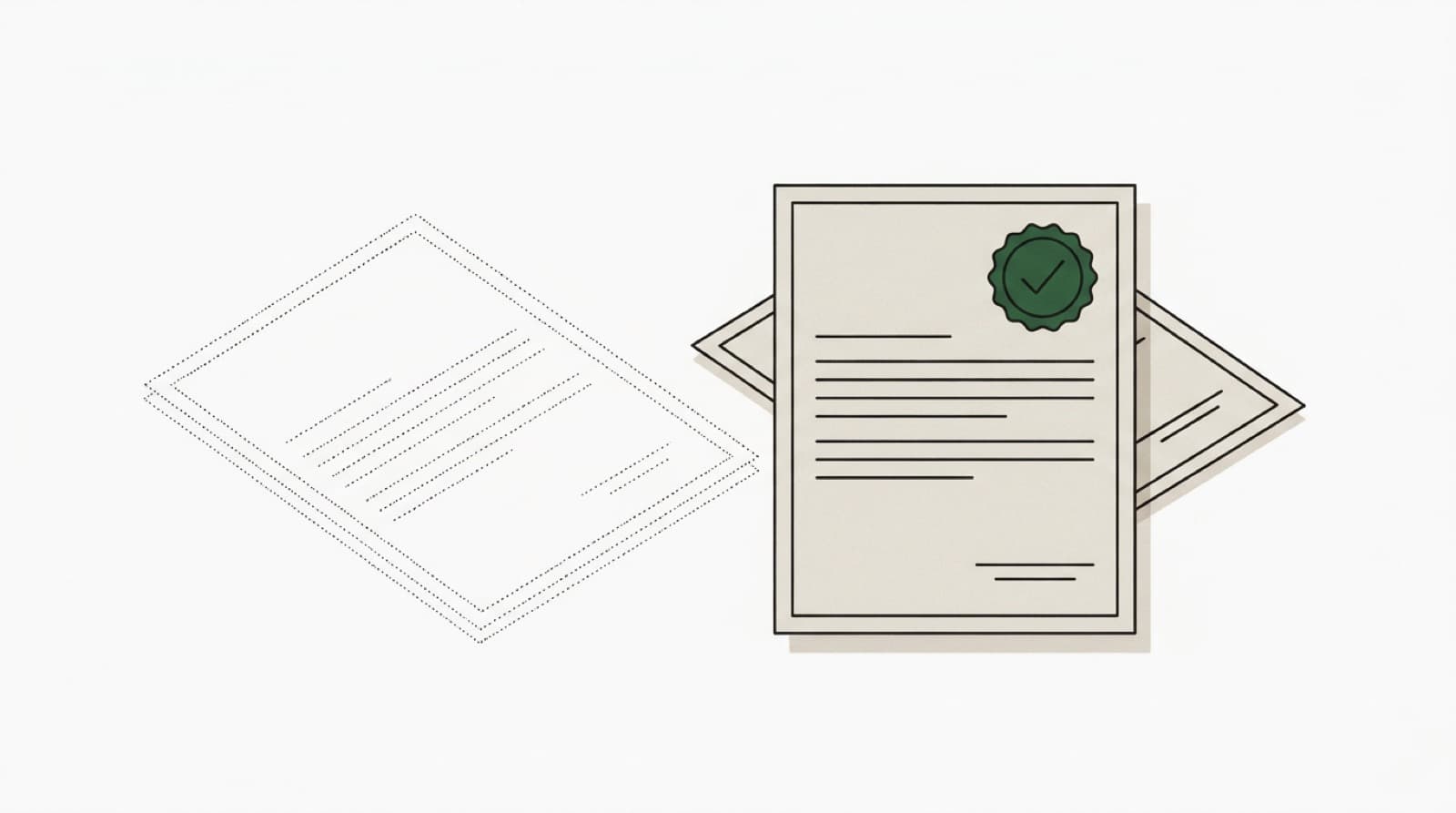
A pre-qualification is a quick estimate of what you might be able to borrow, based on numbers you tell me. No documents, no verification, sometimes not even a credit check. It takes a phone call. The Consumer Financial Protection Bureau describes it as an estimate based on self-reported information. A pre-approval is a deeper review where I pull your credit and verify your income, assets, and debts against actual documents, then issue a letter stating the amount you are approved to borrow. One is a guess built on your word. The other is a conditional commitment built on proof. That difference is exactly what a seller's agent is reading when two offers land on the same house.

What a pre-qualification actually is

A pre-qualification is the warm-up. You tell me your rough income, your monthly debts, your savings, and an estimate of your credit, and I tell you the ballpark price range and loan types that likely fit. It is fast, it is free, and it does not commit either of us to anything. For a buyer who is still six months out, or just wants to know if homeownership is realistic this year, it is the right first move. The limitation is that it relies entirely on unverified numbers. If you underestimate your debts or overestimate your credit score, the pre-qualification range can shift the moment real underwriting begins. Treat it as a planning tool, not a green light. It tells you roughly where you stand so you know what to fix before the real review.

What a pre-approval actually is

A pre-approval is the real review done early. I collect your pay stubs, W-2s or tax returns, bank statements, and identification, pull your credit, and run the file through underwriting before you have even chosen a home. The output is a pre-approval letter stating the loan amount you qualify for under that program. Because the numbers are verified, the letter carries weight: a listing agent can trust that your financing is solid. In Northern Virginia, most sellers will not seriously consider an offer without one. A pre-approval also surfaces problems while you still have time to fix them. A credit issue, a documentation gap, or a debt-to-income problem is far easier to solve in week one than three days before closing with a ratified contract on the line.

Pre-qualification vs pre-approval, side by side

 Pre-qualificationPre-approval
Based onNumbers you tell meDocuments I verify
Credit checkOften none, or a soft pullYes, a full credit review
Documents requiredNonePay stubs, W-2s, bank statements, ID
Time to completeMinutes, a phone callUsually a day or two once documents are in
What you getAn estimated price rangeA letter stating an approved loan amount
Weight with a sellerLittleThe standard for a serious offer

The pattern is simple. Pre-qualification answers "roughly what can I afford?" Pre-approval answers "what will a lender actually fund, and can I prove it?" One helps you plan. The other helps you win the house.

Why the pre-approval matters more in Northern Virginia

In a balanced market a pre-qualification might be enough to start. Northern Virginia is rarely a balanced market. In Fairfax, Alexandria, Annandale, and the close-in suburbs, well-priced homes routinely draw multiple offers within days. When a seller is comparing offers, a verified pre-approval letter is the difference between an offer that gets a counter and an offer that gets ignored. I have watched buyers lose homes not on price but on financing credibility, because the competing offer came in with a stronger letter. Getting fully pre-approved before you tour is not over-preparing here. It is the price of admission. It also lets you move the same day you find the right home, which in this market is often the whole game.

What documents a pre-approval takes

Gathering these up front is the single biggest thing you can do to speed up the process. For most salaried buyers I ask for recent pay stubs covering about a month, W-2 forms for the last two years, two months of bank and asset statements, and a government-issued ID. Self-employed buyers add two years of personal and sometimes business tax returns, plus year-to-date profit-and-loss detail. If you receive other income such as Social Security, a pension, or child support you want counted, bring documentation for that too. The goal is to show stable, documentable income and the funds to cover your down payment and closing costs. The cleaner and more complete your file, the faster the pre-approval, and the fewer surprises later in underwriting.

Does getting pre-approved hurt your credit?

A pre-approval involves a hard credit inquiry, which can lower your score by a small amount, usually a few points, and only briefly. There is an important protection built in for mortgage shoppers. Per the CFPB, multiple mortgage inquiries made within a short window, generally 14 to 45 days depending on the scoring model, are treated as a single inquiry for scoring purposes. That means you can compare a few lenders without stacking up separate dings, as long as you do it inside that window. So the smart move is to do your rate shopping in a tight cluster, not spread out over months. A pre-qualification, by contrast, often uses only a soft inquiry, which does not affect your score at all.

How long a pre-approval lasts, and when to get it

Most pre-approval letters are valid for 60 to 90 days, because the credit report and the financial documents behind them go stale. If your home search runs longer, the letter can be refreshed with updated documents, which is routine. On timing: get pre-approved before you start touring homes, not after you find one. Buyers who wait until they are under contract to start the financing put themselves on a clock and lose negotiating room. The right sequence is pre-qualification if you are still planning, then a full pre-approval once you are ready to shop in earnest, then offers. Start your credit and down payment homework even earlier, so the pre-approval goes smoothly when you get there.

A pre-approval is strong, but it is not the final approval

This is the honest caveat, and I tell every buyer the same thing. A pre-approval is a conditional commitment, not a guarantee. The final loan approval still depends on the specific property appraising, a clean title, and your financial picture holding steady through closing. That last part is where buyers trip themselves up. Opening a new credit card, financing a car, changing jobs, or making a large undocumented deposit between pre-approval and closing can all change the file enough to put the loan at risk. The rule is simple: once you are pre-approved, keep your finances boring until you have the keys. Do not make big money moves without asking me first. A pre-approval gets you to the table with credibility. Steady habits get you to the closing table.

If you are getting ready to buy in Northern Virginia and want a real pre-approval before you start touring, you can book a 15-minute call or start your application whenever you are ready. There is no cost and no obligation to find out where you stand.

Frequently asked questions about pre-approval and pre-qualification

Is a pre-approval the same as a mortgage commitment?

No. A pre-approval is a conditional commitment based on verified documents, but the final loan approval still depends on the property appraising, a clear title, and your finances staying stable through closing. It is much stronger than a pre-qualification, but it is not the last step.

Can I make an offer with only a pre-qualification?

You technically can, but in Northern Virginia's competitive market most sellers will favor offers backed by a full pre-approval. A pre-qualification is best used early, for planning. Get fully pre-approved before you start writing offers.

How long does it take to get pre-approved?

Once you have your documents together, a pre-approval usually takes a day or two. The slow part is gathering pay stubs, W-2s, and bank statements, so collecting those before you start is the best way to speed it up.

Does a pre-approval lock in my interest rate?

No. A pre-approval confirms the loan amount you qualify for, not your rate. Rates move daily and are locked separately, usually once you are under contract on a specific home. For current pricing on your situation, ask for a personalized quote.

Will applying with more than one lender hurt my credit?

Not if you do it within a short window. Mortgage inquiries made inside roughly 14 to 45 days are counted as a single inquiry for scoring purposes, so you can compare lenders without stacking separate hits to your score.

Tareq Maayta is a mortgage loan officer (NMLS #1443073) and Managing Director at Finance USA Corporation, serving first-time and first-generation buyers across Northern Virginia since 2014.

This article is for informational purposes only and is not a commitment to lend. Program availability and terms are subject to change and to underwriting approval. Equal Housing Opportunity.

Have a question this didn't answer?

That's what the first call is for.

Tell me your situation and I'll tell you where you actually stand. Ten to fifteen minutes, no paperwork.